Your cart is empty
Continue Shopping
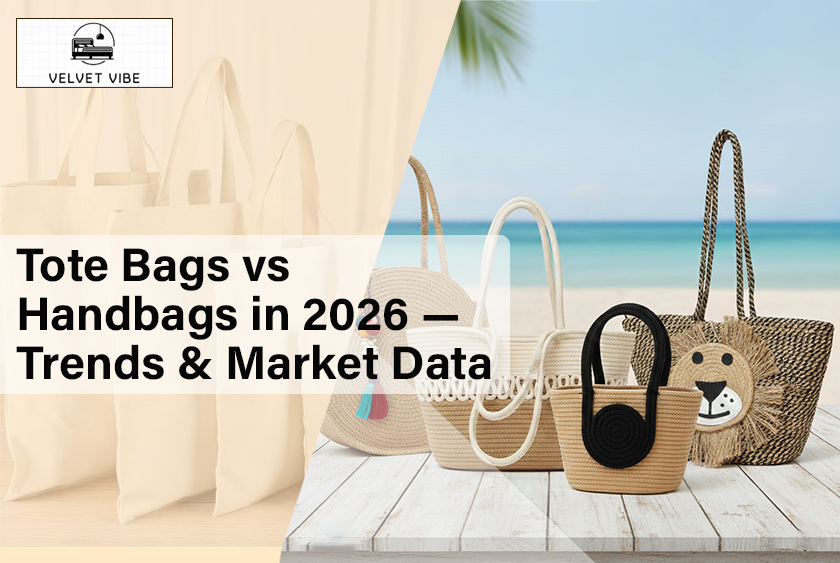
Picture this: it’s a weekday morning in 2026. Someone’s heading out for work, juggling a water bottle, tablet, lunch box, and maybe a spontaneous grocery stop later. The bag they grab isn’t just an accessory—it’s a decision shaped by lifestyle, values, and habit. This simple moment explains why the debate between tote bags and handbags has become more relevant than ever.
In 2026, bags are no longer just fashion items. They sit at the crossroads of utility, identity, and sustainability. Let’s break down how tote bags and handbags compare today, what the data says, and where consumer preferences are heading.
At their core, tote bags and handbags serve different emotional and functional purposes—and that gap has widened over the years.
Tote bags are now seen as everyday problem-solvers. They’re flexible, spacious, and forgiving. They fit into workdays, travel days, shopping days, and everything in between.
Handbags, on the other hand, remain curated. They’re intentional. A handbag is often chosen after the outfit, not before. In 2026, handbags lean more toward style expression and occasion-based use rather than daily carry.
What’s important is this: consumers aren’t choosing one instead of the other. They’re choosing when to use each.
Looking at global accessories trends moving into 2026, a few patterns stand out clearly.
According to global accessories market data published by Statista and supported by Euromonitor International:
One of the biggest drivers behind tote bag growth is the hybrid lifestyle. Research from Think with Google confirms that consumers now shift between cafés, co-working spaces, homes, and offices throughout the week.
Handbags, meanwhile, benefit from premiumization. According to McKinsey’s fashion outlook, smaller collections, better materials, and refined silhouettes help handbags maintain relevance.
Consumers in 2026 carry more items daily — chargers, reusable bottles, journals, and tech accessories. This directly favors tote bags.
Natural fibers like jute and canvas are no longer niche. Buyers now expect eco-conscious materials as standard, especially in totes.
Tote bags have crossed traditional gender boundaries. Their neutral designs and functional appeal have expanded their audience significantly.
Handbags are increasingly used for events, social settings, and short outings. Smaller sizes dominate — less storage, more personality.
Consider a mid-sized lifestyle retailer that stocks both categories throughout the year.
The takeaway?
Tote bags drive consistency. Handbags drive profitability.
Retailers who balance both see healthier inventory turnover overall.
These trends indicate a future where function and narrative matter as much as appearance.
The honest answer: neither — and both.
Smart consumers mix both into their wardrobes. Smart retailers stock both with intention. The future isn’t about choosing sides — it’s about understanding usage moments.
As we move through 2026, the conversation around Tote Bags and Handbags reflects something bigger than fashion. It reflects how people live, move, and prioritise convenience without giving up style.
For retailers looking to align with these shifts — especially those sourcing thoughtfully crafted tote bags, jute products, and lifestyle essentials — working with reliable wholesale partners makes all the difference. Pruthi Shoppers supports modern retailers with Panipat’s finest cushion covers, jute bags, baskets, and floor mats, combining trusted quality with designs that meet today’s market expectations.
Because in a world full of choices, the right bag — and the right supplier — quietly carries everything forward.
In 2026, the key difference lies in usage and intent. Tote bags are designed for everyday, multifunctional use — work, shopping, travel, and casual outings. Handbags, on the other hand, are more style-focused and occasion-driven, often chosen to complement outfits rather than carry multiple items.
In terms of daily usage and volume sales, tote bags are more popular. However, handbags continue to perform strongly in fashion, gifting, and premium segments. Popularity depends on context: totes dominate practicality, while handbags dominate styling moments.
Tote bags are growing faster due to:
These factors make tote bags more adaptable to modern lifestyles.
Yes, absolutely. Handbags retain strong value as fashion statements and occasion accessories. Compact and structured handbags, in particular, are trending in social settings, at events, and as evening wear.
Natural and sustainable materials lead the trend, including:
Consumers now expect eco-friendly materials as a standard feature, especially in everyday tote bags.
Consumers tend to buy tote bags more frequently due to wear and tear, affordability, and utility. Handbags are purchased less often but usually at higher price points.
In many urban and semi-professional settings, yes. Multipurpose tote bags are increasingly replacing backpacks for light workdays, short commutes, and casual travel due to their simplicity and style versatility.
Retailers benefit most by stocking both:
A balanced assortment leads to healthier inventory performance.
Sustainability is no longer a bonus — it’s an expectation. Consumers prefer bags made from natural fibres, ethical sourcing, and durable materials, especially for everyday-use tote bags.
Neither category will fully dominate. The future belongs to intent-driven buying, where tote bags serve functional needs, and handbags serve expressive ones. Consumers will continue to own and use both for different moments in their lives.
Developed & Maintained by Era Sky Technologies in partnership with Exporters Worlds © 2026 All Rights Reserved
Enquire Now