Your cart is empty
Continue Shopping
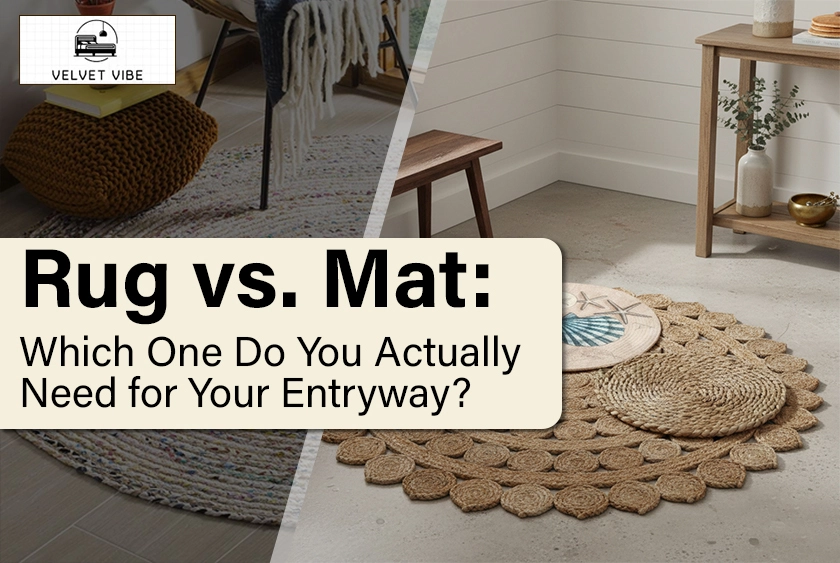
The entryway is one of the most used spaces in any home, yet it is often the most overlooked. Every day, dust, dirt, and moisture enter through this area. That is why the rug vs. mat decision is more important than it seems.
Many people choose a rug or mat based only on looks. After a few weeks, they notice problems, dirt spreading inside, slipping, or quick wear. This guide is written to help you avoid those issues by explaining, in very simple words, what actually works and why.
By the end of this article, you will clearly understand which option suits your space and how to choose it correctly.
Think of the entryway as a filter for your home. Shoes bring in dust, sand, and water. If this area is not set up properly, the mess spreads to every room.
This is where choosing the best entryway mats or the right rug makes a big difference. A good setup saves cleaning time, protects floors, and improves safety.
Before choosing between a rug or a mat, it helps to understand what the entryway needs to do.
A good entryway should:
If a product cannot meet most of these needs, it is not suitable for this space.
An entryway mat is designed mainly for function. Its main job is to clean shoes before people step inside.
This is why best entryway mats are commonly used at main doors, offices, and shops.
In a home with children, mud from shoes kept spreading into the living room. After placing a proper mat outside the door then cleaning time reduced noticeably within days.
Rugs are chosen mainly for comfort and appearance. They are usually placed just inside the door.
Thick rugs are not suitable because they trap dirt and are harder to clean.
In a clean apartment hallway, a small rug inside the door helped absorb light dust and made the space feel warm without creating maintenance issues.
This is where the rug vs. mat choice becomes practical.
This comparison is the foundation of any useful floor mat guide.
Ask yourself:
If dirt and moisture are common, start with a mat.
If the area stays clean, a rug indoors can work well.
Size affects performance. A mat that is too small cleans only part of the foot. A rug that is too large can block the door or create a tripping risk.
Most front doors are about 36 inches wide. A mat that is 30–36 inches wide allows both feet to land fully. A length of 18–24 inches gives space for more than one step, improving dirt removal.
Case Study:
A homeowner replaced a small mat with one that matched the door width. Dirt entering the house reduced significantly within a week.
Leave 6–12 inches of bare floor visible around the rug. The rug should not sit under the door when opened. Common sizes range from 2×3 feet for narrow spaces to 5×8 feet for large foyers.
Case Study:
In a small apartment, a large rug placed under the door curled quickly. Switching to a smaller rug improved safety and appearance.
A simple quality check:
This checklist is used by professionals sourcing the best entryway mats.
Modern buyers prefer:
Reliable suppliers who understand real usage are preferred.
Any updated floor mat guide must reflect these changes.
There is no single answer to the rug vs. mat question. The right choice depends on daily use. Mats work best where dirt, dust, or moisture are common, while rugs placed indoors add comfort and a welcoming feel. Using a mat outside and a rug inside often gives the best balance.
For retailers and buyers, this decision also depends on choosing the right supplier. Consistent quality, clean finishing, and retail-ready designs directly affect customer satisfaction.
Pruthi Shoppers Pesrur, based in Panipat, is trusted for well-crafted entryway mats, rugs, and home decor made with strict quality checks and timeless design. For buyers seeking dependable, natural-material products that are easy to sell and built to last, connecting with Pruthi Shoppers Pesrur is a smart next step.
An entryway mat is made to stop dirt and moisture from entering the home. An entryway rug is used mainly for comfort and appearance. Mats suit outdoor or high-traffic areas, while rugs work better inside clean spaces.
Yes, a mat at the front door helps trap dirt, dust, and moisture before they spread inside. It protects floors, reduces cleaning effort, and improves safety, especially during rainy or dusty conditions.
A rug can be used near the door, but only indoors. Rugs are not designed to handle heavy dirt or moisture, so using a proper doormat outside and a rug inside works better.
Strong and easy-to-clean materials work best for entryways. Natural fibers like jute and coir are durable and breathable. They handle daily foot traffic well and keep the area neat.
Low-quality floor mats may slide, lose shape, or wear out quickly. Some mats also fade or curl at the edges. Choosing well-made mats with proper backing reduces these problems.
Yes, if the entryway is indoors and stays mostly clean. A low-pile rug adds comfort and warmth while improving appearance. Always use anti-slip backing for safety.
A rug is better than a carpet at the entrance. Rugs are easier to clean and replace, while carpets can trap dirt, moisture, and odors for longer periods.
Yes, using a mat or rug pad under a rug helps prevent slipping and protects the floor. It also keeps the rug in place and increases its lifespan.
Rugs can absorb moisture, trap dirt, and slip if not secured. They also need frequent cleaning and are not ideal for outdoor or high-dirt entry areas.
Yes, rugs add visual value by making spaces feel complete and welcoming. In entryways, a well-chosen rug improves first impressions and enhances overall home appearance.
Developed & Maintained by Era Sky Technologies in partnership with Exporters Worlds © 2026 All Rights Reserved
Enquire Now