Your cart is empty
Continue Shopping
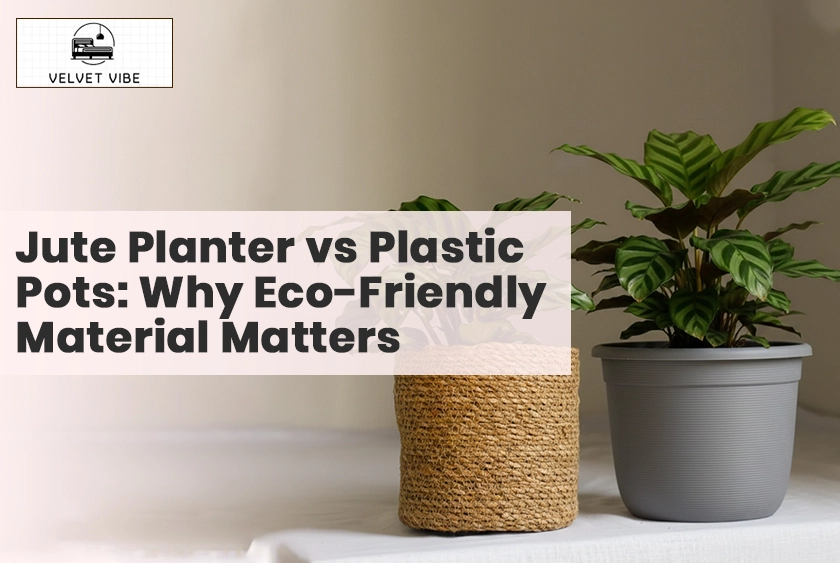
Choosing the right material for your store, nursery, or decor brand can make all the difference. Today’s buyers care about more than just price or appearance; they look for sustainability, story, and long-term value. That’s why the Jute Planter is quickly becoming the preferred choice over plastic pots.
Planters are more than just a purchase for retailers and wholesale buyers; they are a reflection of your brand.
In this blog, we explore why jute planters offer a durable, eco-friendly, and retail-ready alternative that resonates with modern, conscious customers.
Jute has been cultivated in India for over 5,000 years, originally grown along the Ganges Delta in West Bengal, Bihar, and Assam. For centuries, it was primarily used for ropes, sacks, and traditional mats because of its strength, durability, and natural lustre.
Panipat emerged as a hub for weaving and textile craftsmanship. Skilled artisans began experimenting with jute in new ways, creating decorative and functional items, including planters. These early jute planters combined natural fibres with expert weaving techniques, making them both practical and visually appealing.
Today, jute planters carry forward this heritage of craftsmanship, blending centuries-old techniques with modern design. Each planter tells a story of culture, tradition, and sustainable innovation, making them far more than just a container; they are a statement of style and responsibility for eco-conscious retailers and buyers.
Plastic pots are everywhere. They are lightweight, cheap, and easy to produce. But they come with a cost that many customers are no longer willing to ignore. Plastic is petroleum-based, non-biodegradable, and adds to long-term waste.
A jute planter, on the other hand, is made from natural jute fibre. Jute is biodegradable, renewable, and sourced from plants that grow quickly with little need for chemicals. This simple difference already places jute in a better position for brands focused on sustainable home decor.
For your business, this material choice tells a clear story. You are offering something natural, honest, and responsible. That story matters on store shelves and product listings.
Plastic pots often look uniform. Even when coloured or textured, they carry a factory-made feel. Many modern shoppers want warmth and texture, especially when decorating homes, cafes, and offices.
Jute planters bring a soft, earthy look. Their woven texture adds depth and character. Each piece feels unique, which increases perceived value. When placed next to plants, jute enhances the natural beauty instead of competing with it.
From a retail point of view, this makes jute planters easy to merchandise. They blend well with boho, modern, rustic, and minimal themes. This flexibility makes them ideal handcrafted planters for boutiques and concept stores.
Eco-friendly claims only work when customers can understand them easily. Plastic recycling is confusing for many people. Not all plastics are recyclable, and even recycled plastic still contributes to pollution.
A jute planter is simple to explain. It is plant-based, biodegradable, and compostable over time. Customers do not need technical knowledge to see the benefit. This clarity builds trust.
For B2B buyers, this matters because your end customer is already asking questions about materials. Offering eco-friendly planters helps you meet that demand without complicated explanations.
One common concern about natural materials is durability. Plastic is often seen as stronger because it resists water and impact. However, plastic pots crack, fade, and become brittle over time, especially in sunlight.
Jute planters, when properly made and lined, hold up well for indoor and semi-outdoor use. Many are designed with inner linings that protect against moisture while preserving the natural outer layer.
For retailers, this balance matters. You want products that last long enough to keep customers satisfied while still aligning with sustainability goals. A well-made jute planter provides that balance while also serving as a reliable alternative to plastic pots.
Mass-produced plastic pots are often made in automated factories with little human intervention. Jute planters have an amazing story of craftsmanship, especially those made in Panipat.
Panipat is known for its textile and weaving heritage. Skilled artisans turn raw jute into structured, stylish planters using traditional techniques. This adds cultural value that plastic products cannot offer.
When you stock a jute planter, you are also supporting artisan communities and ethical production. This story resonates strongly with boutique owners and conscious buyers who seek more than just decorative items.
Mentioning Panipat craftsmanship in your product descriptions can set your brand apart and add authenticity.
Plastic pots are cheap, but cheap does not always sell well in premium or mid-range retail. Many customers are willing to pay more for products that feel meaningful and responsible.
Jute planters often sit in a higher perceived value category. Their texture, craftsmanship, and sustainability justify better margins. This makes them attractive for B2B buyers looking to improve average order value.
As sustainable home decor continues to grow, products like jute planters allow you to position your brand in a more thoughtful and future-ready space.
Jute planters are lightweight and versatile from a logistics perspective. In order to conserve space during storage and transportation, many designs can be nested or slightly folded.
Plastic pots are rigid and take up more volume, raising transportation costs. They also get damaged easily, affecting the appearance of store shelves.
For wholesale buyers, these practical advantages make jute planters easier to handle. They arrive looking good and are ready for display, which is a key factor for retail-ready inventory.
The future of jute-based products looks strong. As per Future Market Insights Inc., the global jute market is estimated to be valued at USD 3.0 billion in 2025 and is projected to reach USD 5.2 billion by 2035, growing at a compound annual growth rate (CAGR) of 5.8%.
This steady growth reflects rising demand for sustainable, natural alternatives across home decor and lifestyle categories. For retailers and wholesale buyers, investing in jute planters today aligns with where the market is clearly headed.
Today’s buyers are informed. They read labels, ask questions, and expect transparency. Offering eco-friendly planters is no longer a niche choice. It is becoming a standard expectation.
Plastic pots still have a place, but they are increasingly seen as outdated for conscious brands. Jute planters align better with modern values like sustainability, authenticity, and ethical sourcing.
For nurseries and decor retailers, this shift is important. Products that reflect these values help build long-term customer loyalty.
Choosing a jute planter over plastic pots is not just about material. It is about positioning your brand for the future. It shows that you care about quality, the environment, and meaningful design.
As a B2B buyer, you need products that sell themselves. Jute planters accomplish this by combining visual appeal, sustainability, and story. They are simple to explain, display, and stand behind.
Jute Planters—Nature’s Ally:
Plastic Pots—Environmental Cost:
By switching to jute planters, your business helps reduce plastic waste, support sustainable farming, and promote environmentally friendly products that customers love and understand.
When comparing a jute planter with plastic pots, the difference goes far beyond looks. Jute offers sustainability, craftsmanship, and authenticity that modern buyers actively seek. Plastic may be convenient, but jute is thoughtful and meaningful. It creates a warmer, more natural atmosphere that connects better with customers.
If you are exploring genuine, retail-ready jute planters crafted with care and rooted in Panipat’s rich textile heritage, Pruthi Shoppers is a name many conscious buyers already recognise. Their approach focuses on quality and authenticity rather than mass production, making them a natural fit for brands looking to grow responsibly.
Ready to transform your inventory with eco-friendly, handcrafted jute planters rooted in Panipat’s rich history and sustainable tradition? Contact Pruthi Shoppers today to get in touch, explore their full range, and offer your customers products that combine beauty, durability, and responsibility.
1. What are the environmental benefits of jute?
Jute is biodegradable, renewable, and compostable. It absorbs carbon dioxide while growing, improves soil health, and produces less pollution compared to synthetic materials, making it highly eco-friendly.
The jute plant is important because it provides a natural fibre used in eco-friendly products, supports rural livelihoods, improves soil fertility, and reduces dependence on plastic and synthetic materials.
Jute planters are used as decorative outer covers for plants. Place a potted plant or a lined pot inside the jute planter to protect it from moisture while enhancing visual appeal.
Jute is called eco-friendly because it is plant-based, biodegradable, renewable, and requires minimal fertilisers or chemicals to grow. It naturally decomposes without harming the environment.
Yes, jute planters are good for indoor and decorative use. They are lightweight, stylish, and eco-friendly and add a natural look to spaces when used with proper lining.
Jute is a natural fibre obtained from the jute plant’s stem. It is strong, biodegradable, and commonly used to make ropes, bags, mats, and eco-friendly home decor items.
Jute can last several years when kept dry and used indoors. With proper care and lining, jute products like planters maintain their shape and appearance for a long time.
Yes, jute can absorb water because it is a natural fibre. That’s why jute planters usually include an inner lining to protect them from excess moisture.
The two main types of jute are White Jute (Corchorus capsularis) and Tossa Jute (Corchorus olitorius). Tossa jute is finer, stronger, and more durable.
West Bengal is the most famous Indian state for jute production. It has favourable soil and climate conditions and plays a major role in jute cultivation and processing.
Developed & Maintained by Era Sky Technologies in partnership with Exporters Worlds © 2026 All Rights Reserved
Enquire Now